

Teaching
The story of how I became a teacher
As far back as I can remember, I’ve always deeply admired the figure of the teacher. I was that student who stayed after class to ask questions, the one who sought out close, thoughtful conversations with instructors.
During high school, my vocation for teaching became impossible to ignore. I couldn’t help myself—I explained everything to everyone. If someone didn’t understand a topic, I was there, breaking concepts apart until they became as simple and clear as possible.
Before I knew it, this naturally turned into private lessons at my home, student to student. What began as helping friends quickly became so popular that even my classmates’ parents encouraged it.
That’s when I discovered my true strength—and it remains so today: turning complexity into clarity. To me, mastering knowledge doesn’t mean accumulating information, but being able to explain it through everyday analogies, metaphors, or even a quick sketch on a napkin. If something isn’t understood, it simply means I haven’t yet found the right way to communicate it.
Education for Children and Teenagers
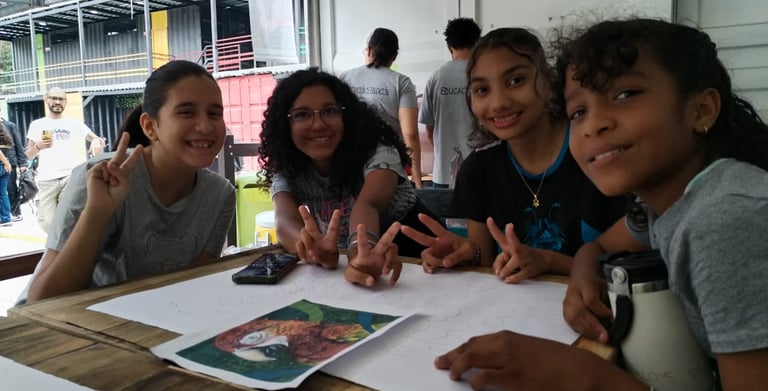
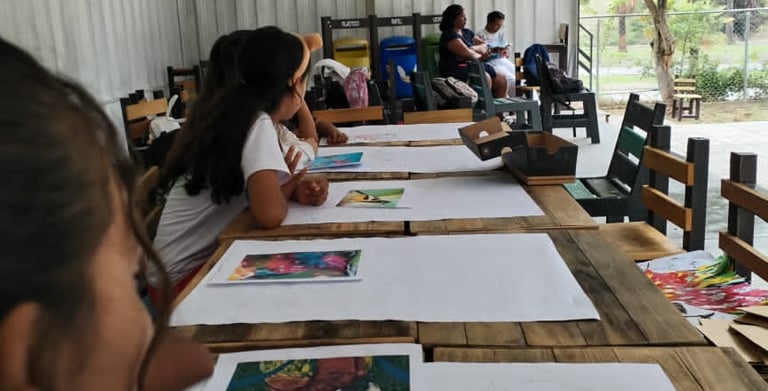
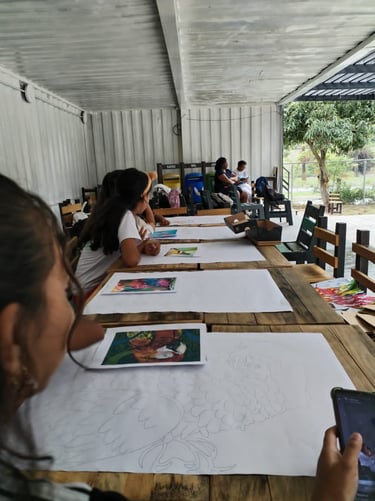
That same passion led me to organize art-focused holiday programs for children and teenagers. Working with groups ranging from six to fifteen years old, each day I taught a new drawing technique through play, recreation, and creativity.
This later evolved into ongoing illustration classes, which continue to this day. We explore a wide range of techniques, including graphite, crayon, India ink, pen/rapidograph, charcoal, chimo, watercolor, markers, acrylic paint, chalk, oil paint, and more. The goal is not only to master different mediums, but to help each student discover and develop their own personal style.
The learning process begins with still life, landscape, and human anatomy as foundational studies for building a solid and personal artistic expression. Over time, we’ve seen students start from zero and reach a basic level within six months, and an intermediate or advanced level within a year.
Because these are ongoing classes, there is no fixed duration. Each student can continue their training for as long as they wish—refining skills and exploring new techniques—since the world of illustration is endless. Some students, for example, have been working with me for over two years: they began with no prior experience and now create acrylic paintings with realistic finishes.
Working with children and teenagers has also been deeply enriching. Their spontaneity, creative problem-solving, and unique way of seeing the world have expanded my pedagogical perspective. From these experiences, I carry not only valuable lessons, but also countless anecdotes that I treasure dearly.
University Education
This path eventually led my alma mater, the Instituto Universitario de Diseño Las Mercedes, to offer me the opportunity to become a university instructor.
Teaching Graphic Design to students in the Advertising and Marketing and Graphic Design programs has been a defining experience in my life. The creative process is complex, intimate, and challenging. Accompanying students on that journey—guiding them, asking the right questions, and watching their ideas evolve through marketing or design—has been a true privilege.
This role has challenged and strengthened me professionally. I’ve sharpened my critical eye, learned how to provide precise feedback, and developed clarity around when a piece is well executed and under what criteria. At the same time, being constantly exposed to students’ work introduces me to fresh, bold ideas different from my own. That diversity reminds me that design can take countless forms, but in all of them, functional logic must exist.
Distance Learning
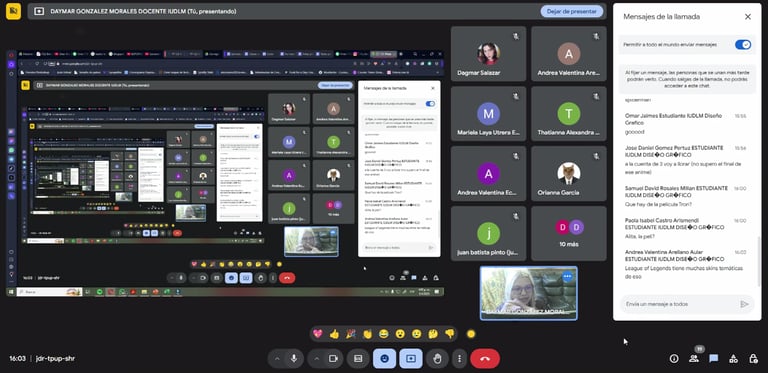
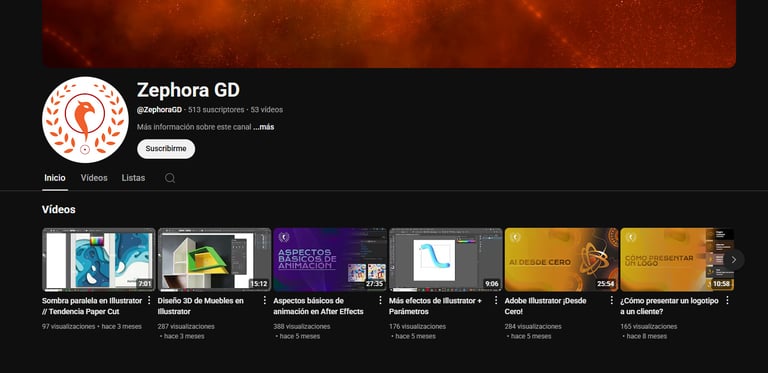
As a university instructor, teaching remotely became necessary. To support this, I created a YouTube channel with accessible tutorials for a broad audience, especially focused on Adobe Illustrator and After Effects. This format allows students to learn at their own pace—pausing, replaying, saving, and revisiting content as often as needed.
I firmly believe that distance education is both viable and powerful, particularly for those balancing studies with other responsibilities, such as work. However, it is often undervalued due to poor implementation by some institutions.
Online teaching requires an active, close, and versatile role from the instructor. The key is to eliminate the feeling of “distance” through pedagogical and technological strategies that foster constant interaction, open dialogue, collaborative dynamics, and even moments of relaxation and fun during live sessions. Teaching online doesn’t mean being less present—quite the opposite. It demands continuous communicative effort so students never feel that distance is a barrier.
Additionally, instructors must create their own teaching materials. Otherwise, students may feel that their facilitator is simply forwarding content from other sources without adapting it to their learning process.
Currently, I combine several platforms to ensure this sense of closeness:
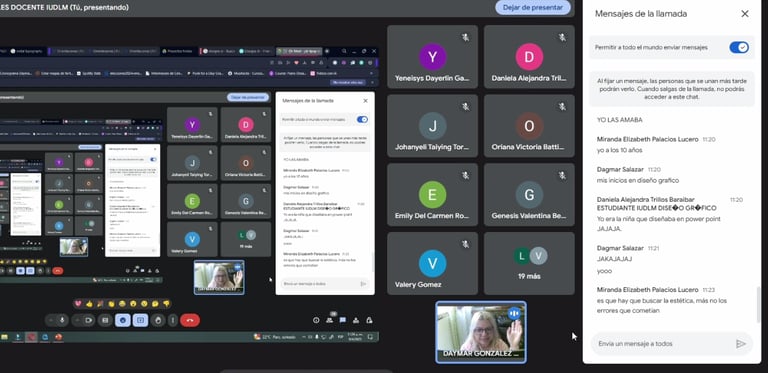
Google Meet: Live video calls to discuss topics in depth. I’ve learned that an evaluation schedule is only a minimum framework; these sessions also allow us to explore additional topics aligned with the student’s profile and future professional goals.
YouTube: Step-by-step tutorials guiding the technical aspects of assignments.
Virtual Classroom: Forums with assignment instructions and a system for submitting work.
WhatsApp: Immediate communication for individual tutoring, questions, announcements, and material sharing.
This integration of tools has allowed me to accompany the learning process in a consistent, accessible, and human way.
Museum Visits
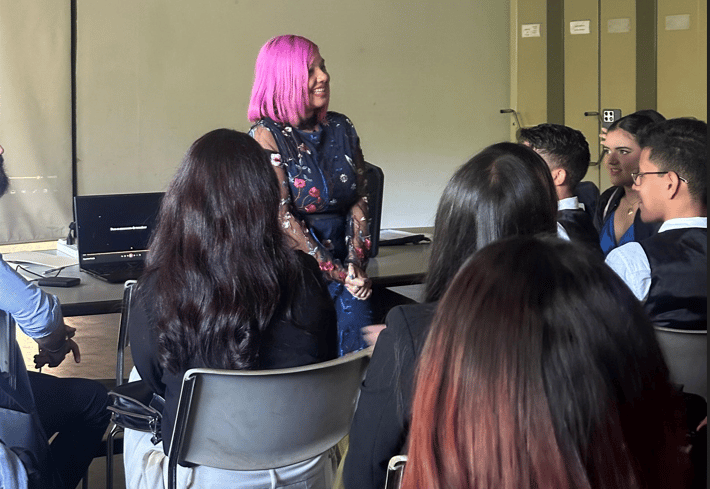
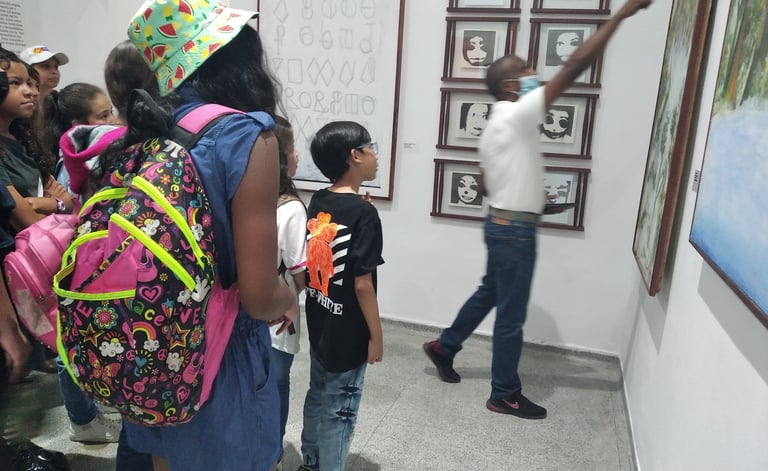
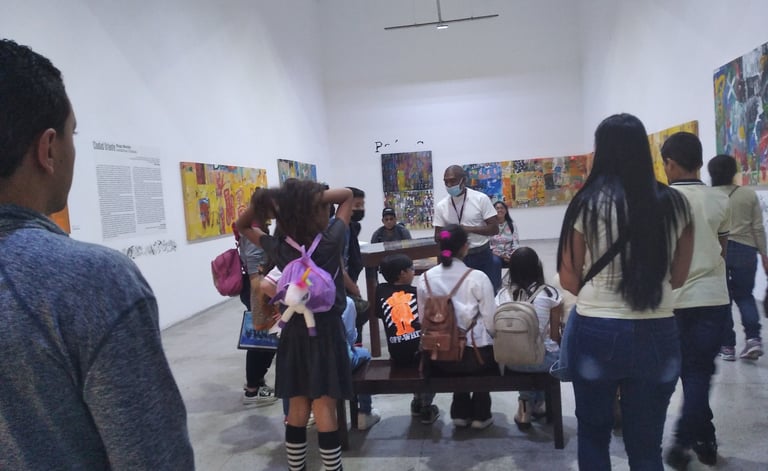
With my children’s and teenagers’ illustration groups, we organize museum visits at least once every two months. These outings aim to expand students’ artistic sensitivity through direct observation of artworks in real contexts, guided by each museum’s professional team. At the end of each visit, we carry out a creative activity—such as drawing, painting, or collage—allowing students to reinterpret what they observed through their own perspective.
Audiovisual Project Exhibitions
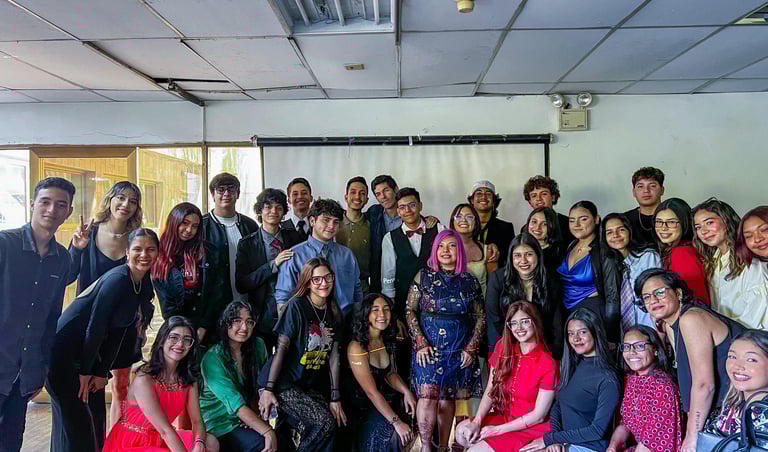
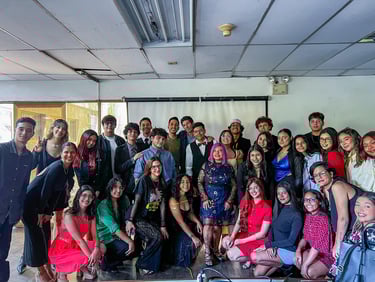
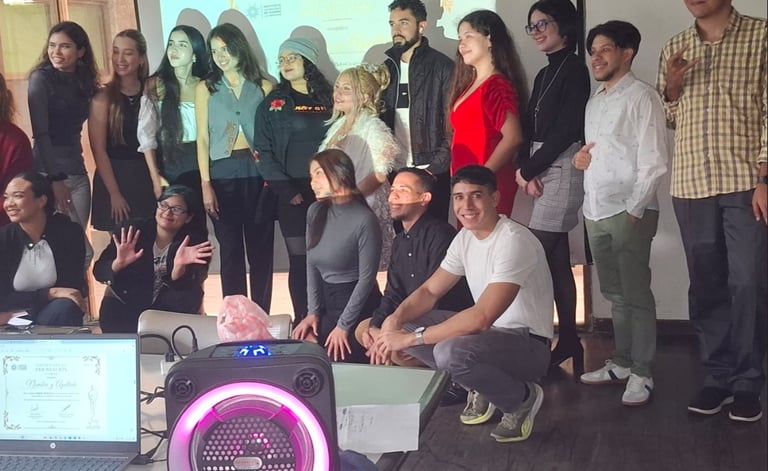
This experiential learning methodology was also integrated at the university level, specifically with fifth-semester Graphic Design students at the Instituto Universitario de Diseño Las Mercedes. At the end of the Computing III course, we organized an audiovisual project exhibition at the Museo de Arte Contemporáneo de Caracas, serving as the closing event of the semester.
I propose a transversal approach that combines technical execution with art history and film theory. During classes, we explore how artistic movements influence contemporary visual narratives—from films and series to music videos and video games.
As a final project, each student directs their own short film or audiovisual piece, presented in an exhibition where various categories are awarded: Best Film, Best Animated Film, Best Animated Short, Best Direction, Best Visual Effects, Best Editing, Best Actress, Best Actor, Best Cinematography, Best Sound Editing, and more. This dynamic not only motivates students, but also strengthens self-confidence, critical thinking, and professional teamwork.
Teaching has been, for me, an act of love, creativity, and responsibility. Whether in front of a group of children, in a university classroom, or behind a screen, I have always sought to build bridges between knowledge and people. Because beyond transmitting content, what truly drives me is accompanying processes, awakening curiosity, and leaving a meaningful mark on those who learn alongside me.
Follow me on Social Media
Zephora Graphic Design © 2025. All rights reserved.