
The Phenomenon of Design Democratization
So… what’s up with Canva?
Brace yourselves, designers of the world!
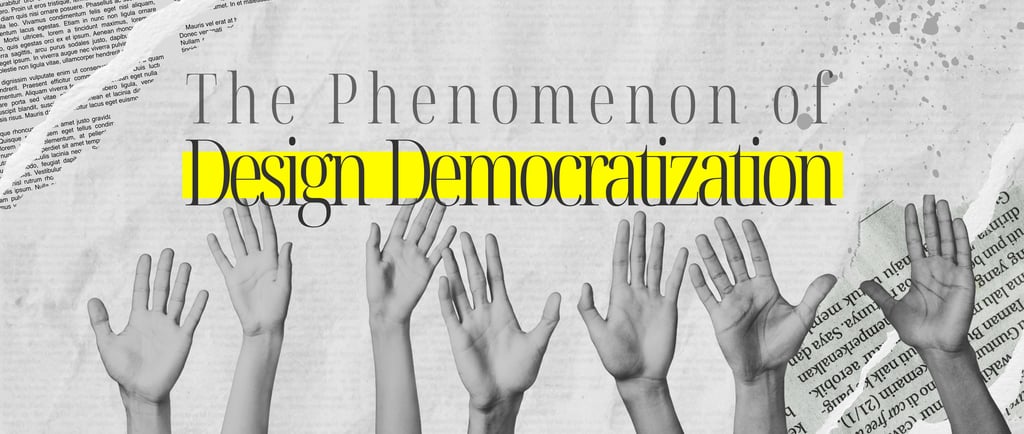
We’re in the middle of a creative revolution: the democratization of design. What does that mean? Well, basically, design is no longer reserved for a chosen few—the ones with fancy degrees and years of experience under their belts. Now everyone can be a designer. Good designers. Bad designers. Questionable designers.
But how has this affected those of us who’ve spent years mastering complex software and sophisticated techniques? Let’s get into it.
First things first: what exactly is this “democratization of design,” and why should we care? In short, it means design has become accessible to the masses. Not long ago, creating a simple poster required a professional designer and a decent budget. Today, with tools like Canva, anyone can put together something presentable in a matter of minutes—and for free. Impressive, right?
Well… not everyone is thrilled about this news. But let’s dig a little deeper.
Now, let’s talk about Canva. This platform has become something of a messiah for entrepreneurs and design newbies alike. With ready-made templates, intuitive tools, and a friendly interface, it has made creating attractive visuals incredibly easy. It’s no surprise that Canva has experienced explosive growth in recent years.
Here’s a piece of advice for designers everywhere: leave entrepreneurs alone. For entrepreneurs—especially those without a big budget—it makes perfect sense to handle some marketing tasks themselves. Over time, many of them will need professional help. Making design and marketing tools accessible has encouraged countless people to start businesses, and under no circumstances should that be seen as a bad thing.
Why do I say this? Because I’ve seen many graphic designers frustrated when a client decides to stop hiring them and do everything themselves in Canva. The lesson here is simple: that person was never your ideal client. Instead of wasting energy on that frustration, focus on finding clients who understand and value professional design—including entrepreneurs who are ready to invest in it.
Whether an entrepreneur can’t afford a designer—or simply doesn’t want to—should be the least of our concerns. In the early stages of any business, independence and low expenses are usually priorities. If they do their design well or poorly on their own, the consequences fall entirely on their business. And let’s be honest: there are plenty of brands out there with non-professional design that still sell well, because they connect with their audience in other ways.
That said, there are still millions of brands and people who genuinely need designers.
So where does the real problem lie? In many cases, it’s not Canva—it’s that designers don’t know how to find potential clients. If that resonates with you, I invite you to read my article: How to Find Graphic Design Clients.
But wait… doesn’t all of this sound familiar? Exactly. The democratization of design has a fascinating historical precedent: the democratization of the fine arts.
In the past, only the privileged had access to artistic education and materials. With the rise of the printing press and broader access to education, art became available to everyone. The same thing is happening now with design.
So what does all of this mean for us—professional designers? Should we be afraid for our jobs and our status? Not really. In a world where everyone can be a designer, our role becomes even more important. We’re the ones with the knowledge and experience to take design further—to create work that is truly meaningful, strategic, and unique.
It’s impossible to argue that the democratization of art or graphic design is entirely negative—especially if we think in terms of the greater good. Whether you realize it or not, you’ve benefited from many forms of democratization: technology, education, the arts, and more. Graphic design itself was once a highly manual craft, with little technological intervention. If it had remained frozen in time, many of us probably wouldn’t have chosen this career. One of the earliest steps in design’s democratization was the integration of technology—computers, equipment, specialized software—which sparked interest, simplified processes, and allowed the industry to grow.
Of course, there are downsides. The market is crowded, and the idea that “anyone can be a professional” is becoming more common. Competition is fiercer than ever, and standing out requires a solid strategy and clear positioning. The key thing to understand is this: it is still possible to be a graphic designer and make a living today—but it requires a great deal of cleverness.
So, in conclusion, the democratization of design is an exciting phenomenon that’s reshaping how we interact with art and creativity. Designers who adapt—by embracing new technologies, expanding their skills, and finding ways to stand out in a sea of generic designs—will continue to thrive. After all, in a world where everyone can be a designer, the real magic lies in originality, innovation, and being a good designer.
Curious about how Artificial Intelligence fits into all of this? I invite you to read my article on AI.
Let the design revolution begin.


Follow me on Social Media
Zephora Graphic Design © 2025. All rights reserved.